

Perforated aluminum panels are often recognized for their pattern and visual depth. But their value is not in appearance alone.
Across sunshades, canopies, facades, equipment screens, parking structures, and custom architectural structures, perforated panel systems can help manage light, airflow, visibility, and shade while supporting the overall design intent.
The result is an architectural feature that connects visual intent with practical performance across exterior applications.
Perforation pattern scale, spacing, color, and finish can change how a building reads from the street and how it feels up close.
A subtle pattern can add texture without competing with the architecture. A more expressive design can support branding, wayfinding, or a stronger public-facing identity. For shopping centers, schools, entertainment districts, and commercial developments, this gives project teams a way to create recognition without relying only on signage.
Perforated aluminum also allows greater control over the pattern itself. Round, square, slit, or ornamental – each choice affects the relationship between light, shadow, and surface.
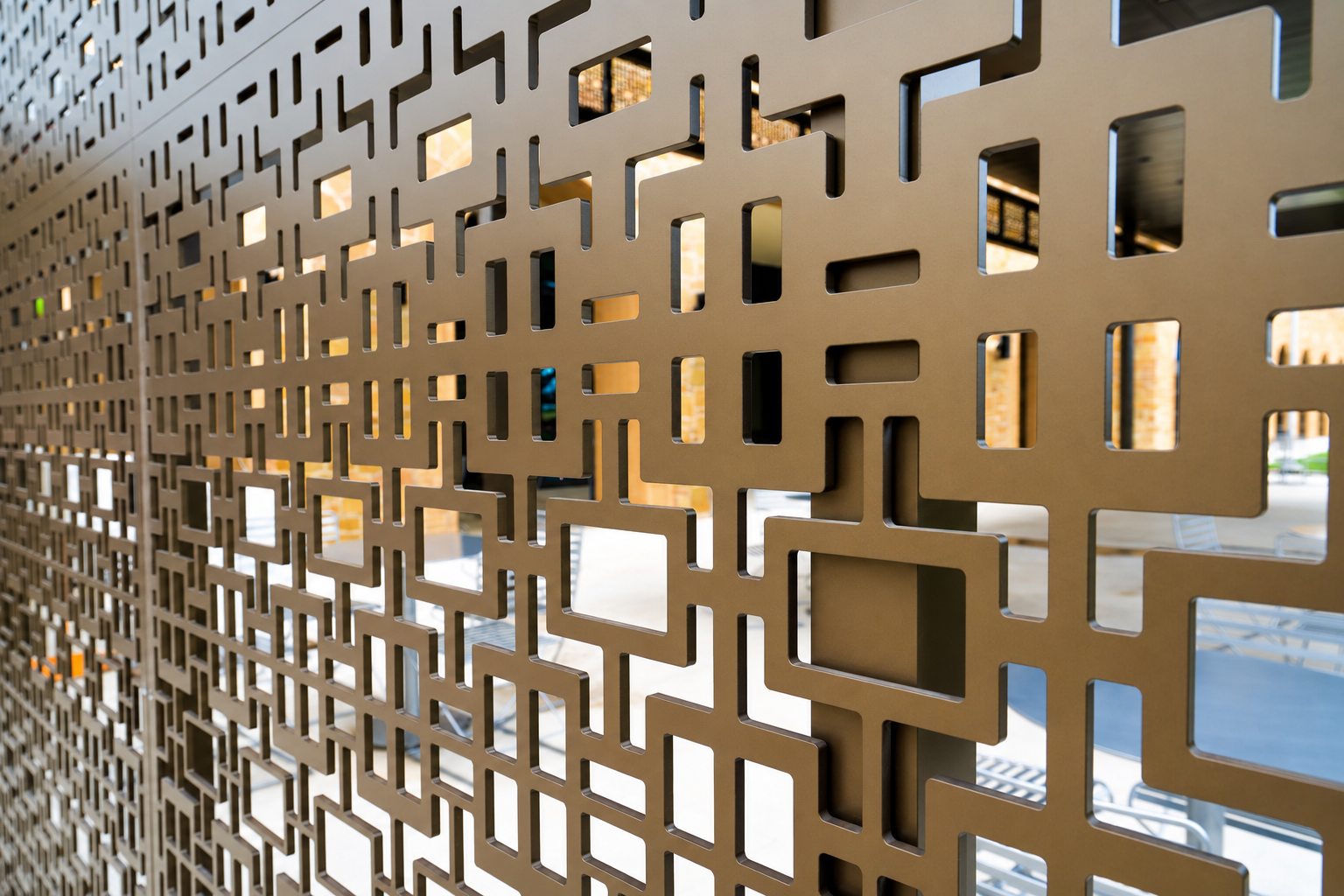
Patterned aluminum can filter daylight while still allowing openness through the surface. This is especially useful where a solid face would feel too closed, but a fully open condition would not provide enough shade or visual control.
On canopies and walkways, custom panels can create filtered shade across the path below. On facade applications, they can soften direct heat exposure and help the structure maintain a lighter architectural presence. As sunlight moves throughout the day, the pattern can create changing shadow, depth, and movement.
Performance is shaped by key variables: open area, perforation size, panel orientation, panel layout, location, and the distance between the screen and the surface behind it. A tighter configuration can create more shade and privacy. A more open configuration can allow more daylight and visibility.
_edit.jpg)
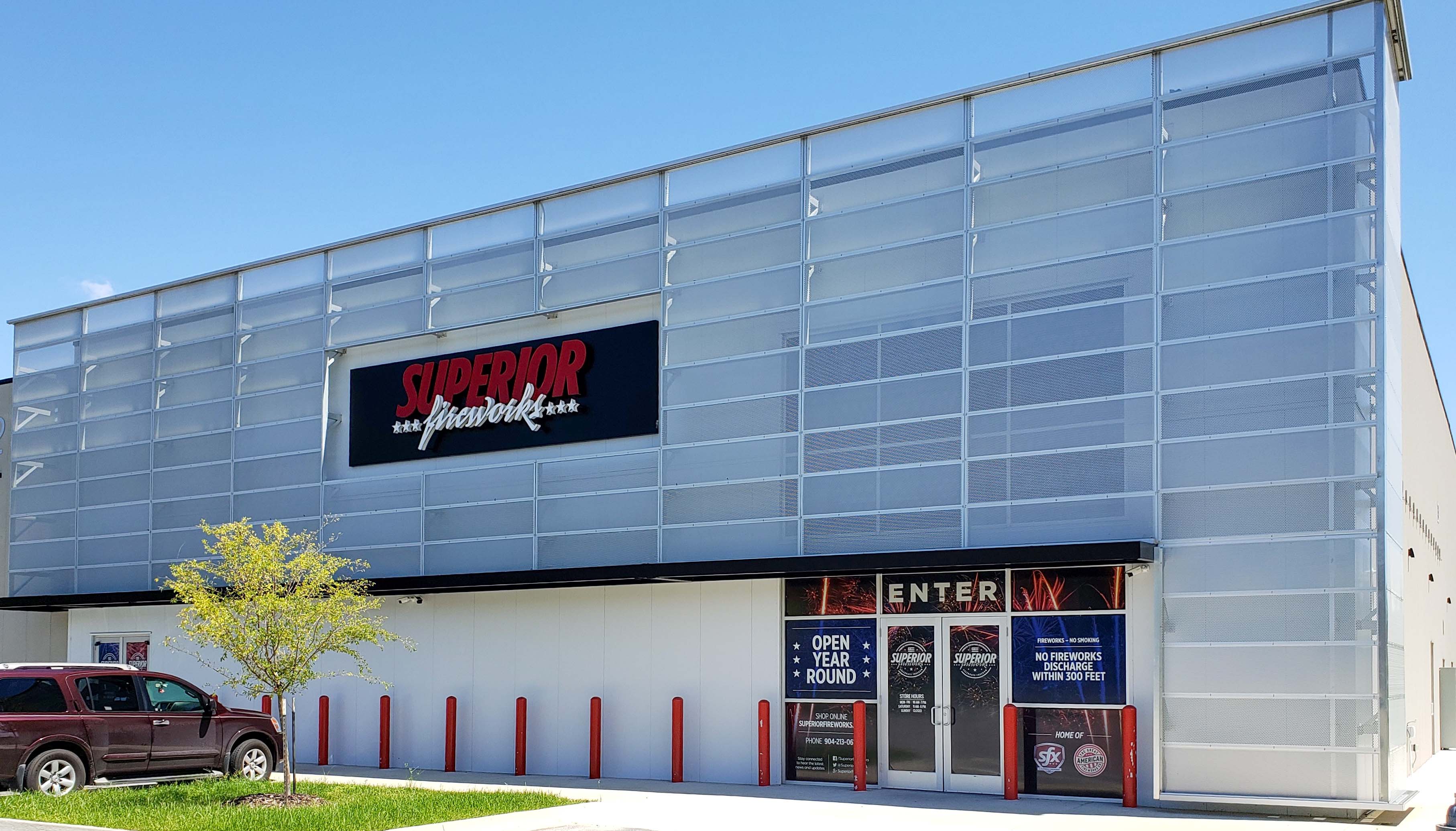
Many buildings include practical areas that need visual control, including parking garages, rooftop equipment, service zones, loading areas, and mechanical enclosures.
Perforated aluminum panels can screen these areas without making the exterior feel sealed off or heavy. They reduce exposed views, organize visual clutter, and help necessary conditions feel connected to the architecture around them.
For parking structures, custom aluminum screens can support ventilation while giving the exterior a stronger architectural presence. When specified and engineered for the application, the same screen system can also serve as a pedestrian safety barrier, helping the structure meet functional requirements without disrupting the overall design.
For equipment and service areas, screens can conceal systems while maintaining airflow, maintenance access, and a cleaner visual edge.
Custom aluminum panels can become part of a project’s identity when pattern, color, and lighting are handled with intention.
For branded environments, custom aluminum can incorporate logos, geometric motifs, school colors, tenant identity, or site-specific patterning. When paired with backlighting, the cut pattern can create contrast between the aluminum face and the illuminated layer behind it. This can make the feature more visible at night, at a building entry, or from a distance.
This approach works well for retail centers, hospitality projects, campus entries, civic buildings, and public-facing commercial spaces where the architecture needs to be recognizable without feeling overstated.
Perforated aluminum can also work as part of a larger canopy or walkway assembly. In these applications, the patterned component may provide shade, visual detail, screening, or identity while the full system addresses structure, drainage, attachment, and weather coverage.
Where rain protection is required, the complete canopy assembly matters. A patterned aluminum screen can contribute shade and design character, while acrylic, glass, or other canopy components may be used to support coverage in the broader system. That distinction helps keep the design accurate and the performance expectations clear.
Early coordination is important because panel seams, framing, finish, edge conditions, lighting, and attachment details all affect the final result.
%20D1.jpg)
Perforated aluminum panels can do more than add pattern and filter light. When design intent and functional requirements are considered from the start, one system can address different conditions across a building or site. It can manage visibility, support airflow, shape the exterior, and give necessary features a finished role in the overall design.
For architects, developers, and general contractors, that is the practical value: a custom aluminum system that brings appearance and function into the same architectural solution.
Explore AVAdek's perforated panel systems for your next project.


